


- Home
- About Us
About Us
- Product
Product
- Cases
Cases
- R&D Technology
- News
News
- Contact Us


- Default Language
 EN
EN RU
RU ES
ES DE
DE EL
EL IT
IT JA
JA KO
KO PT
PT ID
ID SR
SR UK
UK VI
VI TH
TH TR
TR MS
MS BE
BE AR
AR
中山市In-depth Analysis of Wastewater Treatment Costs: How Policies, Technology and Market Affect Expenses | Latest Interpretation 2024
Date:July 13, 2025ID: 2206Views: 925
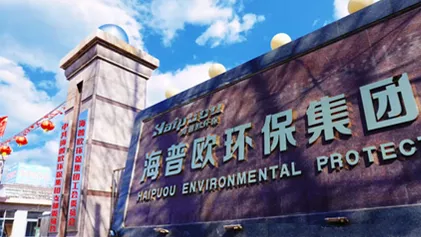
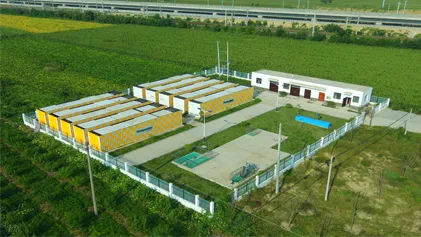
Haipuou Environmental Protection Group Co., Ltd. specializes in the construction of sewage treatment projects and the production and sales of water treatment equipment. Our main products include integrated sewage treatment equipment, high-efficiency cyclone purifiers, magnetic separation sewage treatment equipment, prefabricated sewage treatment plants, smart water management platforms, sludge thickening equipment and air flotation equipment.
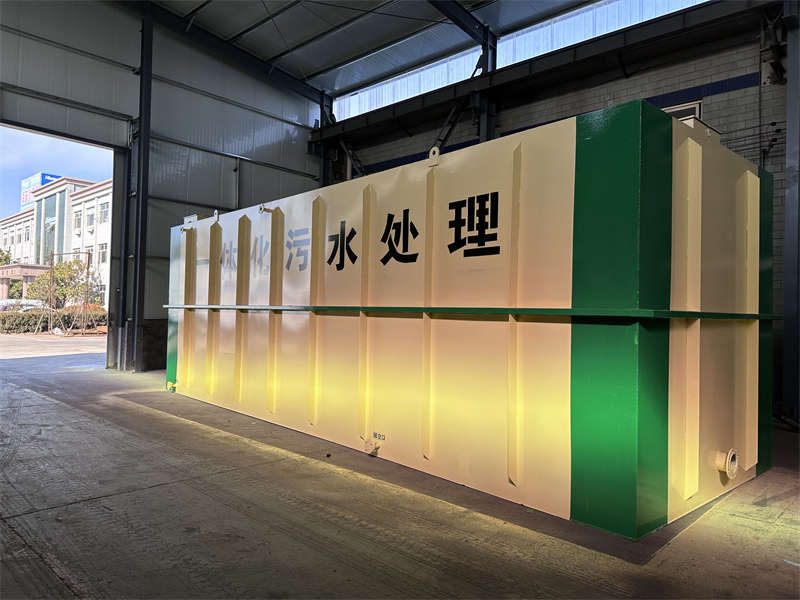
Sewage treatment cost is a core issue in environmental governance. It relates to enterprises' compliance operating expenses as well as the sustainability of urban ecological management. Against the backdrop of continuously tightened environmental policies, rapid iteration of sewage treatment technologies and constant innovation of market models, profound changes have taken place in the composition, pricing logic and optimization approaches of sewage treatment costs. From multiple perspectives including policy orientation, technical selection, market modes and regional differences, this paper comprehensively analyzes the key influencing factors and practical optimization plans for sewage treatment expenses, providing professional reference for industry practitioners, enterprise managers and decision-makers.
I. Core Impacts of New Policies on Sewage Treatment Costs: Compliance Cost Becomes a Key Variable
Environmental policies serve as the primary lever regulating sewage treatment expenses. A host of new regulations issued in 2024 have directly restructured cost components, with compliance costs accounting for an ever-growing share.
1. Upgraded Discharge Standards Force Cost Increases
The revised draft of Discharge Standard of Pollutants for Municipal Wastewater Treatment Plants (GB 18918-2002) has been released. Some regions have implemented stricter effluent standards in advance, such as COD ≤30mg/L and total phosphorus ≤0.3mg/L. To meet the new requirements, sewage treatment plants need to build additional advanced treatment units such as ozonation and activated carbon adsorption. Construction investment will rise by 20%-40%, and the operating cost per ton of water will increase by 0.5-1.2 yuan.
2. Dual Restraints from Environmental Protection Tax and Carbon Policies
The environmental protection tax is levied based on pollutant discharge concentration. Excessive emissions will lead to a 2-5 times tax surcharge, compelling enterprises to improve sewage treatment efficiency. Meanwhile, carbon peaking policies push sewage plants to carry out energy-saving retrofits. Low-carbon technologies including photovoltaic power supply and waste heat recovery raise short-term investment but cut long-term energy costs. Many projects have achieved both carbon emission reduction and cost optimization.
3. Subsidies Are Inclined Toward Resource Utilization Projects
Current subsidies are no longer limited to basic sewage treatment; priority is given to reclaimed water reuse and sludge resource recovery projects. For instance, industrial enterprises with a water reuse rate above 50% can receive an operating subsidy of 0.5-1.0 yuan per ton of water. Special subsidies are available for sludge processed into qualified organic fertilizer, offsetting a large portion of treatment expenditure.
II. Correlation Between Technical Selection and Sewage Treatment Costs: Choose the Right Solution to Avoid Unnecessary Expenses
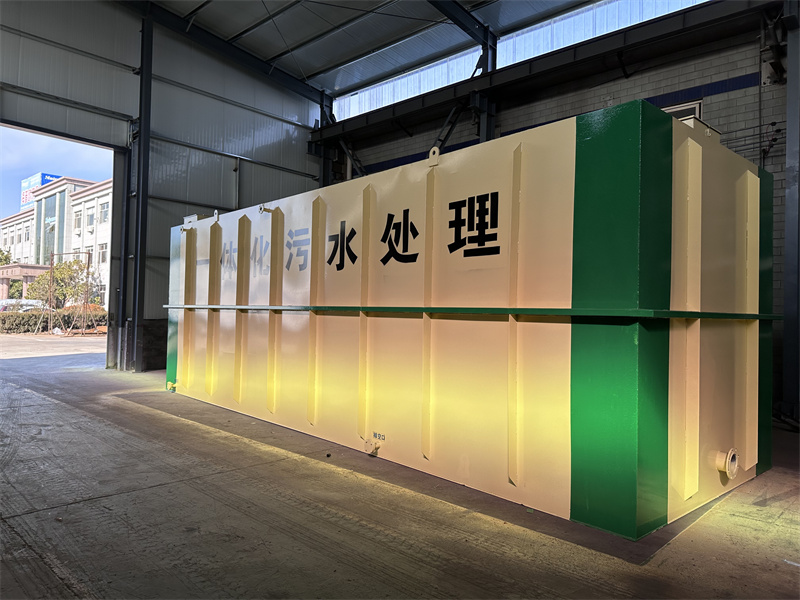
The choice of sewage treatment technology directly determines overall expenditure. The cost gap between different technical routes can reach several times, so solutions must be matched precisely according to water quality, treatment scale and discharge standards.
1. Traditional vs. New Processes: Cost Comparison
Traditional processes (activated sludge method, oxidation ditch): Suitable for low-concentration domestic sewage. The construction cost stands at 300-800 yuan per ton of capacity. However, these processes feature high energy consumption (0.8-1.2kWh per ton of water) and large chemical dosage. They are mainly adopted in large municipal sewage plants;
Innovative processes (MBR, MBBR, shortcut nitrification and denitrification): Boast high treatment efficiency, and the effluent can be directly reused. Operating energy consumption per ton of water is reduced by 30%-50%, yet core equipment such as membrane modules leads to high upfront investment (construction cost: 800-1500 yuan per ton of capacity). These processes fit scenarios with strict discharge standards or water reuse demands;
Ecological processes (constructed wetland, biofilter): Applicable to rural areas and low-concentration sewage. The operating cost is extremely low (0.3-0.8 yuan per ton of water). The main drawbacks are large land occupation, long treatment cycles and obvious vulnerability to natural conditions.
2. Cost Optimization Brought by Intelligent Technology
Digital and intelligent technology has become a critical measure to cut sewage treatment costs:
Online water quality monitoring system: Tracks real-time changes in COD, ammonia nitrogen and other indicators, dynamically adjusting chemical dosage and equipment operating parameters to reduce reagent waste by 15%-25%;
IoT + remote operation and maintenance: Enables early fault warning and intelligent scheduling, cutting manual inspection labor and downtime losses. Operation costs can be lowered by 10%-18%;
Big data optimization model: Analyzes historical operating data to optimize process parameters and strike a balance between energy consumption and treatment effect. The cost per ton of water can be reduced by 0.3-0.6 yuan in many projects.
III. Market Model Innovation: Cut Sewage Treatment Costs Through Operational Optimization
Apart from technology and policies, innovative business models provide new ways to control costs, with distinct cost logic for each mode.
1. PPP Model: Share Construction Costs and Improve Operational Efficiency
The PPP (Public-Private Partnership) model is widely used in municipal sewage treatment projects. Private investors take charge of construction and operation, while the government pays service fees based on treated water volume. This eases short-term fiscal pressure on local governments. Meanwhile, professional operation by private parties reduces operating costs per ton of water by 10%-20%. At present, the service fee for municipal PPP projects in first-tier cities is mostly 1.2-2.5 yuan per ton.
2. Centralized Park Treatment: Cost Reduction via Scale Effect
Industrial parks adopt the "centralized collection + unified treatment" model, where multiple enterprises share one set of sewage facilities to achieve economies of scale:
Shared construction investment: Individual enterprises no longer need to build independent facilities; they only pay for pipeline connection and water treatment, cutting construction expenditure by 60%-80%;
Higher treatment efficiency: Processes are customized according to park industries to avoid redundant construction and inefficient operation. The cost per ton of water is 30%-45% lower than that of independently built facilities.
3. Third-Party Operation Trusteeship: Lower Hidden Costs Through Specialization
Many enterprises entrust their sewage facilities to professional third-party operators, bringing prominent benefits:
Professional teams optimize chemical selection and equipment operating parameters to eliminate unnecessary consumption;
Avoid fines caused by equipment breakdowns and excessive pollutant discharge. After entrustment, comprehensive treatment costs for many enterprises drop by 15%-25%.
IV. Regional Disparities in Sewage Treatment Costs: Factors Causing Geographic Cost Gaps
Great differences exist in sewage treatment expenses across China, driven by economic development level, resource prices and policy strictness. Regional cost benchmarks in 2024 are as follows:
1. East and South China: High Costs Matched with Strict Standards
Cost per ton: Municipal domestic sewage 1.5-3.2 yuan/ton, general industrial wastewater 8-20 yuan/ton, refractory industrial wastewater 25-65 yuan/ton;
Key reasons: The strictest environmental regulations, high electricity prices (0.6-0.8 yuan/kWh), high labor costs, strict sludge harmless disposal requirements (300-500 yuan per ton), and limited land pushing up construction costs.
2. North and Central China: Moderate Costs Amid Tightening Policies
Cost per ton: Municipal domestic sewage 1.0-2.5 yuan/ton, general industrial wastewater 6-15 yuan/ton, refractory industrial wastewater 20-50 yuan/ton;
Key reasons: Policy stringency is moderate, resource prices stay at medium levels. Some areas fall within the Beijing-Tianjin-Hebei coordinated pollution control zone, leading to slightly higher costs than surrounding regions.
3. Northwest and Southwest China: Low Costs with Generous Subsidies
Cost per ton: Municipal domestic sewage 0.8-1.8 yuan/ton, general industrial wastewater 5-12 yuan/ton, refractory industrial wastewater 18-45 yuan/ton;
Key reasons: Low electricity prices (0.3-0.5 yuan/kWh) and labor cost, abundant land resources. Local governments offer substantial subsidies for facility construction and operation to boost environmental governance.
V. Practical Cost-Saving Tactics for 2024: Applicable to Both Enterprises and Municipal Projects
Both industrial projects and municipal sewage treatment plants can cut expenses through the following practical methods while balancing environmental compliance and economic benefits.
1. For Enterprises: Full-Chain Cost Reduction from Source to Outlet
Optimize production processes: Adopt clean production technologies to reduce sewage volume and pollutant concentration. For example, circulating water systems used by chemical enterprises can lower treatment load by over 30%;
Separate treatment for water of different qualities: Treat high-concentration and low-concentration wastewater separately. High-pollution sewage is handled with high-efficiency processes, while low-pollution sewage adopts simplified treatment to avoid one-size-fits-all cost waste;
Claim policy subsidies: Apply actively for reclaimed water reuse and sludge resource recovery subsidies, and make full use of environmental tax reduction and equipment investment tax credits to maximize policy dividends.
2. For Municipal Projects: Scale Expansion + Intelligent Upgrading
Optimize pipe networks: Carry out rainwater-sewage diversion renovation to avoid excess treatment capacity caused by rainwater inflow, cutting energy and reagent consumption;
Integrate facilities: Combine small scattered sewage stations into regional centralized treatment plants to achieve scale effects, reducing cost per ton of water by roughly 30%;
Low-carbon retrofits: Build photovoltaic power stations on idle land inside plants and install waste heat recovery systems to generate self-sufficient electricity and lower energy expenditure.
VI. Future Trend: Sewage Treatment Costs Will Feature Both Cost Reduction and Value-Added Income
Over the next 3 to 5 years, driven by technological progress, model innovation and policy guidance, two major trends will emerge:
Further technological cost reduction: The localization rate of membrane materials and energy-saving equipment will keep rising, and biological treatment technologies will be upgraded continuously. The overall treatment cost per ton of water will drop by 10%-15%;
Expanded value-added space: Water reuse, sludge recycling and energy recovery will become mainstream business lines. Resource income can cover more than 50% of treatment costs in many projects, and some plants will even turn profitable;
Maturing market-oriented pricing: Industrial sewage treatment will adopt refined pricing based on water quality and service content. More market competition will be introduced into municipal sewage projects to optimize cost structure.
Conclusion
Cost control for sewage treatment is not merely about cutting spending, but finding the optimal balance among policy compliance, technical matching and market rules. As environmental governance enters a high-quality development era, cost optimization will increasingly rely on technological innovation, business model upgrading and refined management. Enterprises and institutions should keep up with policy updates, select appropriate treatment technologies rationally, take full advantage of market resources, fulfill environmental obligations, and minimize comprehensive costs.
Prev: Comprehensive Guide to the Selection, Application and Maintenance of Domestic Sewage Equipment for Efficient Implementation of Sewage TreatmentNext: Sewage treatment enterprises are the core force guarding the water environment, pursuing technological innovation while shouldering social responsibilities.
Related Products
Related News
- 中山市New Trends in the Development of the MBR Membrane Wastewater Treatment Industry: A Professional Guide to Selecting Source Manufacturers
- 中山市How to Select Wastewater Treatment Equipment for Pig Farms? In-depth Review of Trusted Industry Service Providers
- 中山市Hard-to-Treat Slaughterhouse Wastewater? Tested & Recommended High-Adaptability Wastewater Treatment Solutions for 2026
- 中山市How to Select Integrated Wastewater Treatment Equipment? In-depth Review of Trustworthy Source Manufacturers Recognized by Industry Insiders
- 中山市How to Select Buried Integrated Wastewater Treatment Equipment? Strength Evaluation of Reliable Brands in 2026
- 中山市Inventory of New Coal Mine Water Treatment Technologies! How to Select Cost-Effective Manufacturers & Avoid Common Pitfalls
- 中山市Textile Printing & Dyeing Wastewater Treatment Is Tough? These Four Powerful Enterprises Easily Solve Core Industry Pain Points
- 中山市Authoritative Evaluation of High-Salinity Wastewater Treatment Equipment | Top Recommended Brands of 2026
- 中山市Which Supplier Offers Reliable Integrated Sewage Treatment Equipment? Multi-dimensional Actual Test Comparison & Top Recommended Brands Released
- 中山市Electroplating Factory Wastewater Treatment Engineering Cases
About Us
products
Business
News
Contact Us
Service Hotline:+86-15253659088WhatsApp: +86 18706508001
Email: jly@haipuou.group
Address: No.56, Donghuan Road, Zhucheng City, Weifang City, Shandong Province, China